"Minimal to Survive: The Three Essentials for Short-term Survival!"
Introduction
Minimal to Survive Short-term: Shelter, Water, Fire! is a guide to help you prepare for and survive short-term emergencies. It provides information on the three most important elements of survival: shelter, water, and fire. It covers the basics of building a shelter, finding and purifying water, and starting a fire. It also provides tips on how to stay safe and healthy in an emergency situation. With this guide, you can be prepared to survive any short-term emergency.
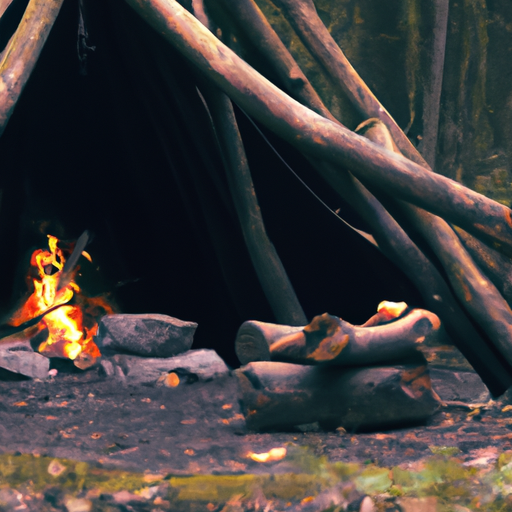
How to Build a Minimalist Shelter for Short-term Survival
Building a minimalist shelter for short-term survival is an important skill to have in case of an emergency. It is important to be prepared and know how to construct a shelter that will provide protection from the elements and keep you safe. This guide will provide step-by-step instructions on how to build a minimalist shelter for short-term survival.
Step 1: Find a Suitable Location
The first step in building a minimalist shelter is to find a suitable location. Look for an area that is sheltered from the wind and rain, such as a grove of trees or a rocky outcropping. Make sure the area is free of debris and has enough space for you to comfortably fit inside.
Step 2: Gather Materials
Once you have found a suitable location, you will need to gather materials to build your shelter. Look for branches, leaves, and other natural materials that can be used to construct the shelter. If you have a tarp or other waterproof material, this can be used to provide additional protection from the elements.
Step 3: Construct the Shelter
Using the materials you have gathered, begin constructing the shelter. Start by creating a frame using the branches and leaves. Make sure the frame is sturdy and will provide adequate protection from the elements. Once the frame is complete, use the tarp or other waterproof material to cover the frame. Secure the material to the frame using rope or twine.
Step 4: Add Insulation
Once the shelter is constructed, add insulation to keep you warm. Gather leaves, grass, and other natural materials and use them to line the inside of the shelter. This will help to keep you warm and provide additional protection from the elements.
Step 5: Final Touches
Once the shelter is complete, add any final touches that will make it more comfortable. If you have a sleeping bag or other items, place them inside the shelter. This will provide additional warmth and comfort.
By following these steps, you can easily build a minimalist shelter for short-term survival. Make sure to practice building shelters in a safe environment before attempting to build one in an emergency situation. With the right materials and knowledge, you can easily construct a shelter that will provide protection from the elements and keep you safe.
Finding and Purifying Water for Short-term Survival
Finding and purifying water is essential for short-term survival. Without access to clean water, dehydration can set in quickly, leading to serious health complications. Fortunately, there are several ways to find and purify water in a survival situation.
The first step is to locate a water source. This can be a river, lake, pond, or even a puddle. If possible, try to find a source that is away from human activity, as this will reduce the chances of contamination. Once you have located a water source, it is important to purify the water before drinking it.
Boiling is the most effective way to purify water. Bring the water to a rolling boil for at least one minute to kill any bacteria or viruses. If you do not have access to a fire, you can also use a water filter or chemical purification tablets. Water filters are designed to remove bacteria, viruses, and other contaminants from water. Chemical purification tablets are also effective at killing bacteria and viruses, but they can leave a bad taste in the water.
Finally, if you are unable to find a water source or purify the water, you can also collect rainwater. Collecting rainwater is a great way to get clean water without having to purify it. Simply place a container outside during a rainstorm and collect the water as it falls.
Finding and purifying water is essential for short-term survival. By following the steps outlined above, you can ensure that you have access to clean, safe drinking water in a survival situation.
How to Start a Fire with Minimal Resources for Short-term Survival
Starting a fire with minimal resources is an important skill for short-term survival. Fire can provide warmth, light, and a means of cooking food. It can also be used to signal for help. To start a fire with minimal resources, you will need a few basic items.
First, you will need a fire starter. This can be anything from a lighter to a magnesium fire starter. If you do not have a fire starter, you can use a battery and steel wool. Simply connect the positive and negative ends of the battery to the steel wool and it will spark and ignite.
Second, you will need tinder. This is material that will easily catch fire. Examples of tinder include dry grass, leaves, and bark. You can also use cotton balls or dryer lint.
Third, you will need kindling. This is material that will help the fire grow. Examples of kindling include small twigs, sticks, and pine needles.
Once you have gathered your materials, you can begin to build your fire. Start by creating a small pile of tinder in the center of your fire pit. Place your fire starter on top of the tinder and light it. Once the tinder is burning, add the kindling to the fire. Continue to add more kindling until the fire is burning steadily.
Starting a fire with minimal resources is an important skill for short-term survival. With the right materials and a bit of practice, you can easily start a fire with minimal resources.
The Benefits of Minimalism for Short-term Survival
Minimalism is a lifestyle choice that has become increasingly popular in recent years. It involves reducing the amount of possessions and material items one owns, and instead focusing on experiences and relationships. While it is often seen as a long-term lifestyle choice, minimalism can also be beneficial for short-term survival.
One of the main benefits of minimalism is that it can help to reduce stress. When we own fewer possessions, we have less to worry about and maintain. This can help to free up our time and energy, allowing us to focus on more important tasks. Additionally, minimalism can help to reduce financial stress. By owning fewer items, we can save money on purchases and reduce our overall expenses.
Minimalism can also help to improve our physical health. By owning fewer items, we can reduce the amount of clutter in our homes, which can help to reduce stress and improve air quality. Additionally, minimalism can help to reduce the amount of time we spend cleaning and organizing our homes, allowing us to focus on more important tasks such as exercise and healthy eating.
Finally, minimalism can help to improve our mental health. By reducing the amount of possessions we own, we can reduce the amount of time we spend worrying about them. This can help to free up our mental energy, allowing us to focus on more important tasks such as self-care and relaxation. Additionally, minimalism can help to reduce the amount of time we spend comparing ourselves to others, as we are no longer focused on material possessions.
In conclusion, minimalism can be beneficial for short-term survival. It can help to reduce stress, improve physical and mental health, and free up our time and energy. For these reasons, minimalism is an excellent lifestyle choice for those looking to improve their short-term survival.
Conclusion
In conclusion, the three basic elements of minimal survival in the short-term are shelter, water, and fire. These three elements are essential for any person to survive in the short-term, and they should be the first priority when preparing for any survival situation. With the right knowledge and preparation, anyone can survive in the short-term with just these three elements.